Bathroom tile ideas: floors, showers and walls that work together
How to choose tile for a bathroom so the floor, the shower and the walls look like they belong together, with ideas you can borrow.
Most people start a bathroom by falling for a single tile: a marble-look slab in a showroom, a handmade glaze on a friend’s backsplash, a hexagon floor in a photo. That is a good way to begin. The trick is to treat that first tile as the anchor and build the room around it, because in a bathroom every surface touches another. The floor meets the wall, the wall meets the shower, the shower meets the vanity top. Tiles that look wonderful alone can fight each other once they share a room.
Decide what the room has to do
Before you choose anything, spend a week noticing how the bathroom is actually used. A kids’ bathroom that gets splashed every night asks more of its floor than a guest bath that is rarely touched. A room with one small window needs help bouncing light around. The shower you use every morning deserves more of your attention than the wall behind the toilet.
Write down the one or two things you want from the space, whether that is calm, bright, dramatic or simply easy to keep clean, and let those decide the rest. Almost every good bathroom has one feature the eye lands on, with everything else quietly supporting it.
Scale changes how big the room feels
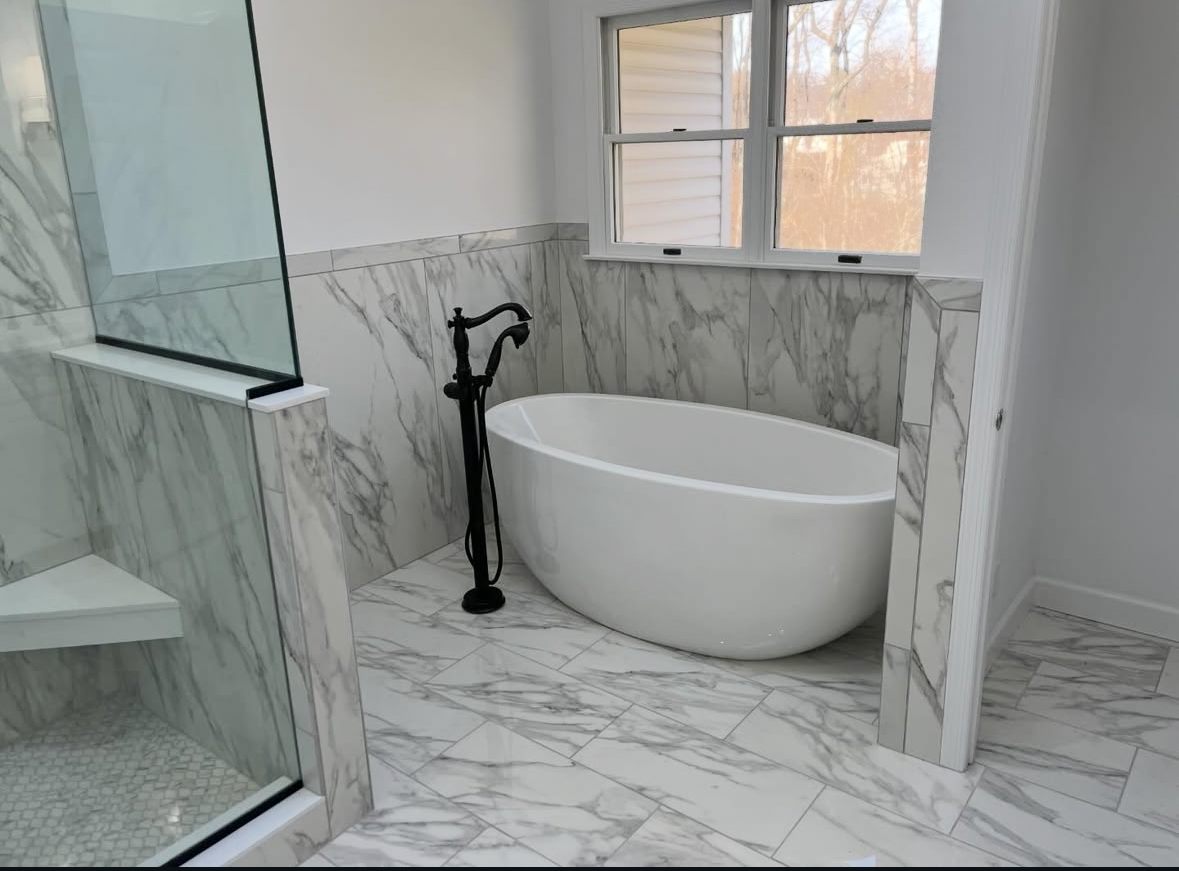
Tile size is the quickest way to change a bathroom’s character. Large-format tile, the kind that runs 12x24 inches and up, has fewer grout lines, so the surface reads as one calm plane and a small room feels less chopped up. Small tile does the opposite. It adds texture and movement, and the extra grout lines give a shower floor more grip underfoot.
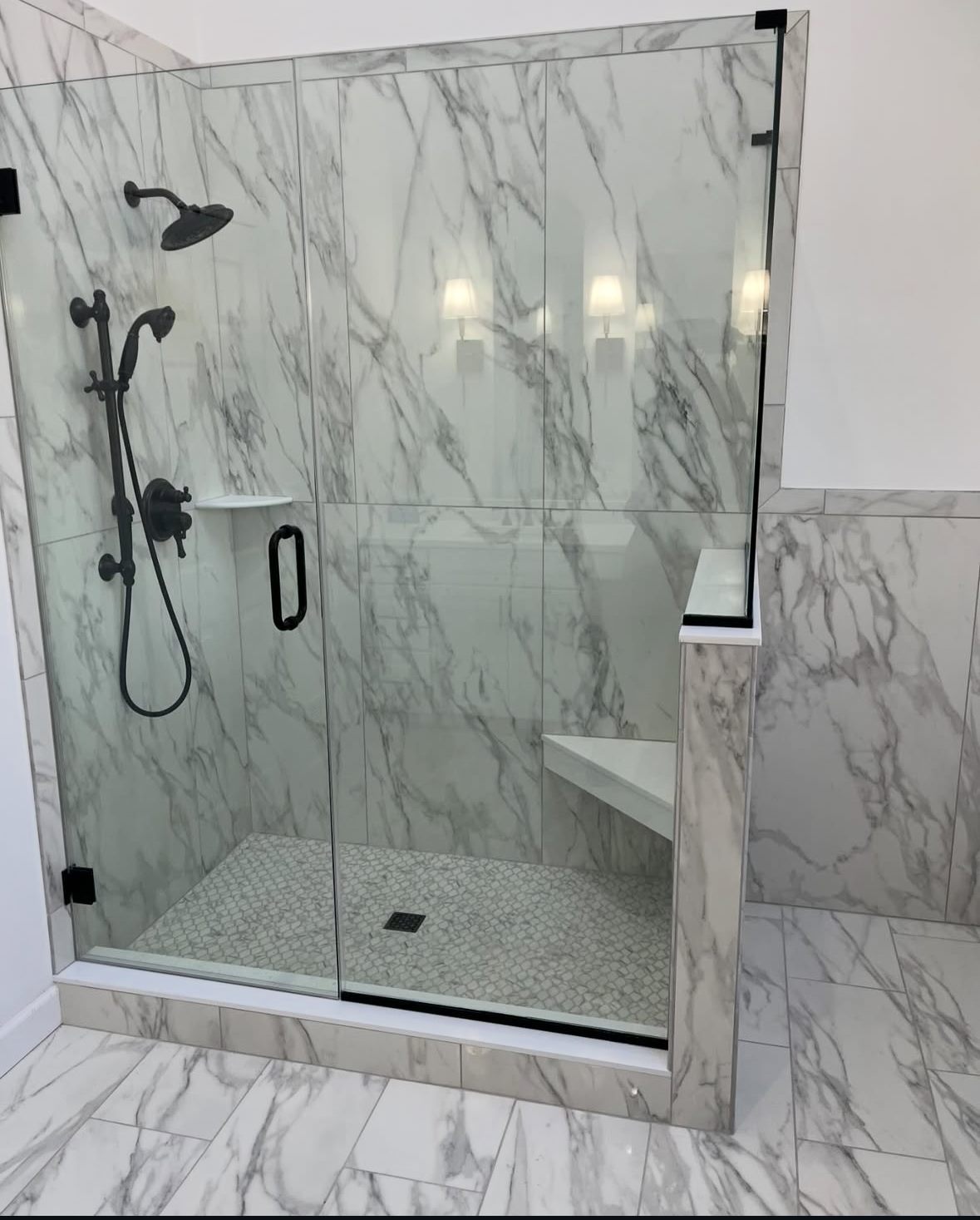
Many of the best bathrooms use both: large tile on the walls and the floor, then a small mosaic in the shower pan or a niche, where the pattern becomes a detail instead of the whole story. The shower below is a good example. The large marble-look panels keep the walls quiet, and the little mosaic underfoot gives the floor character and traction.
Marble looks, with or without the upkeep
Marble is still the look people ask about most for bathrooms, and there are two honest ways to get it. Real marble has veining no printed tile can fully copy. It is also softer and more porous than other stone, so it needs sealing and some care around soap, shampoo and anything acidic. Marble-look porcelain gives you Calacatta, Statuario or Carrara patterns with the toughness of porcelain, which is why it is such a popular choice.
If you love the real thing, use it where it will be wiped rather than scrubbed: a vanity top, a feature wall, an accent band. If you want a surface that shrugs off daily use, put the porcelain on the floor and in the shower. Mixing the two works better than people expect. Browse marble-look tile or natural marble to compare them side by side.
Pattern is where a plain bathroom gets personality
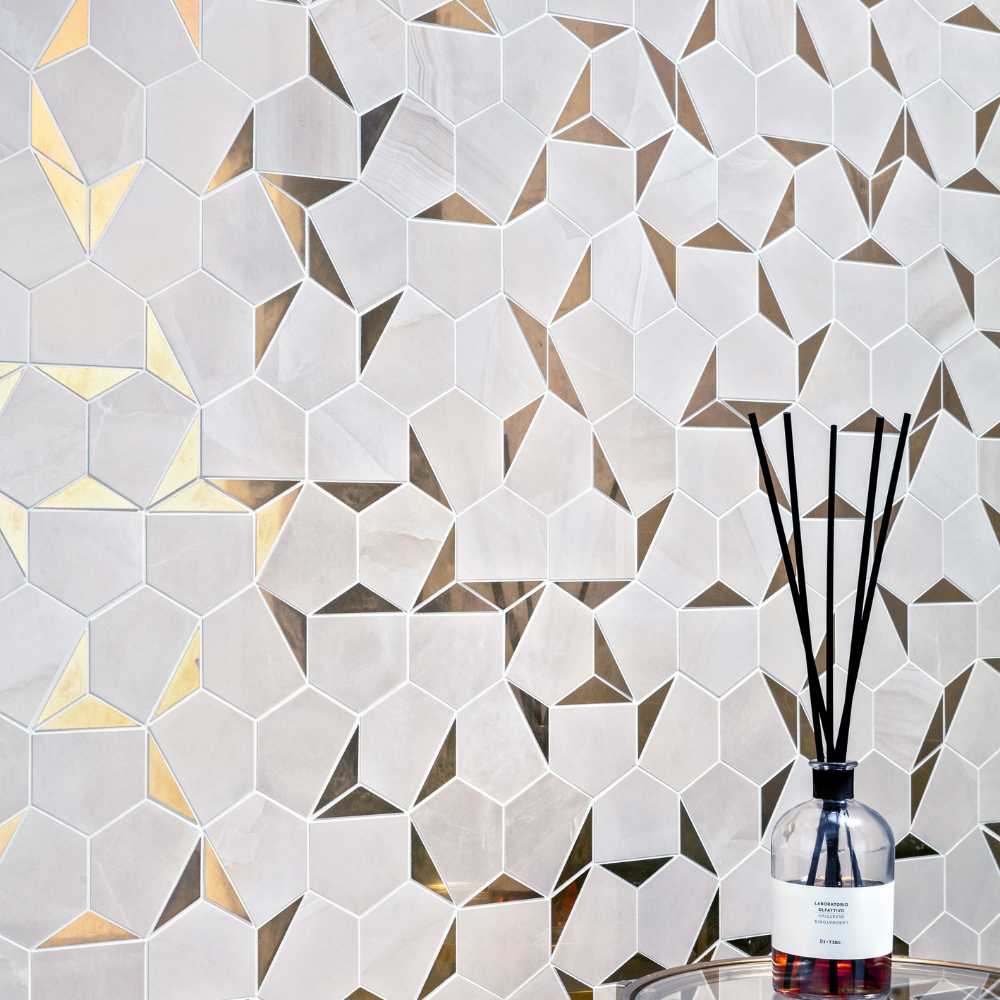
If the tile itself is quiet, the layout can do the talking. Herringbone gives a floor a sense of direction and suits long, narrow bathrooms. Hexagons feel classic and a little playful, reading as texture when they are small and as shape when they are large. Chevron is sharper and more graphic, and basket weave leans traditional.
Running the same tile in a different pattern on the floor and the wall is a simple way to add interest without introducing a second color. One practical note: pattern layouts take more cutting and more careful setting than a straight lay, so plan on extra tile for waste and talk to your installer early.
Color, finish and light
White is not boring. It is flexible. A glossy white wall tile bounces light into a windowless bathroom, while a matte warm white feels softer and quieter. Cream and beige keep a room warm, gray and black make it moodier, and green or blue can make a small room feel like a destination.
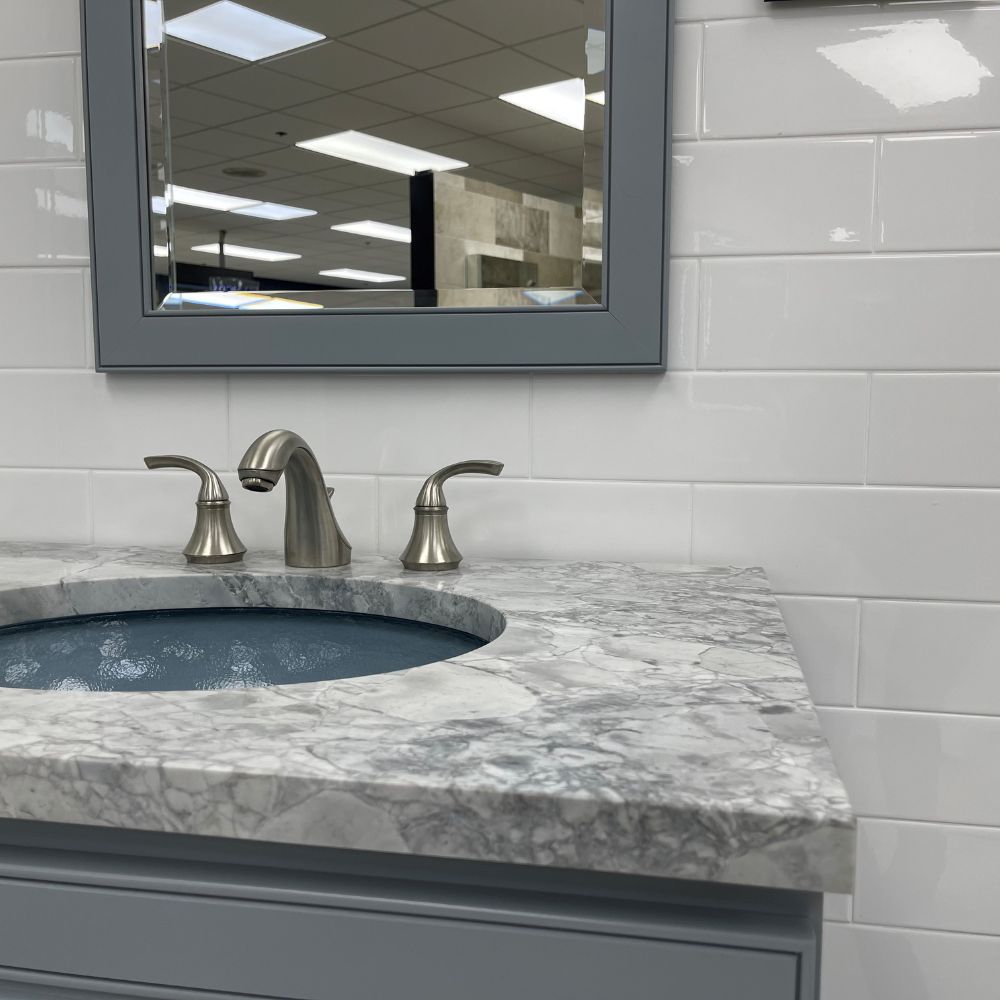
Finish matters as much as color. Gloss reflects light and shows off a glaze, but it also shows water spots and can be slippery underfoot. Matte hides spots and grips better. A good rule of thumb is shine on the walls and texture on the floor.
Floors, walls and the wet zone
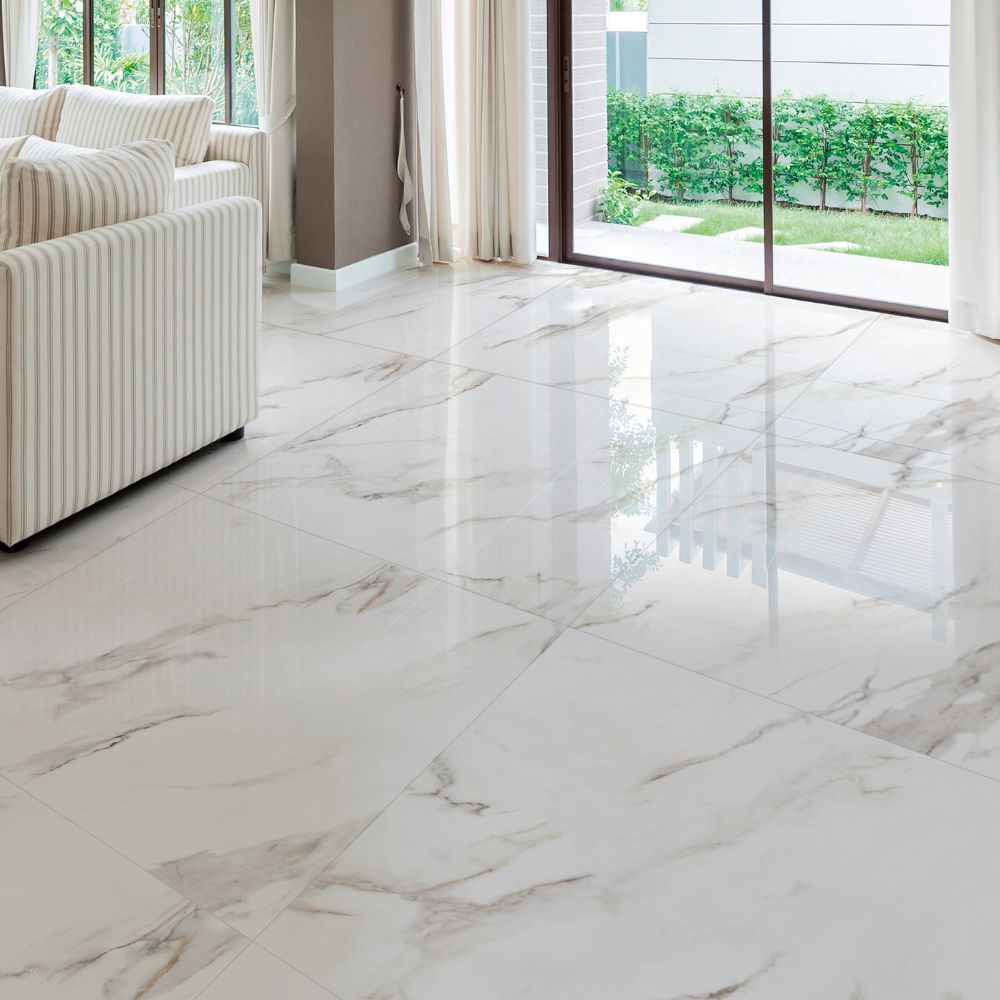
The floor is where practical choices matter most. Choose tile that is rated for floor use, and when you compare options, ask about each tile’s slip resistance (look for the DCOF rating), especially for a shower floor or a bathroom children use. Porcelain is the usual pick for bathroom and shower floors because it absorbs so little water. Ceramic is perfectly good on walls, and our porcelain vs ceramic guide explains why.
Underneath all of it, the waterproofing and prep behind the tile matter more than the tile itself. That is the part nobody photographs, and it is where an experienced installer earns their keep.
The details that make it look finished
Grout color changes the whole read. Matching the grout to the tile makes a surface look calm and continuous. Contrasting grout draws the pattern like a sketch, which is lovely with subway or hexagon and risky with a busy tile. Edges matter too: a trim piece or bullnose finishes the tile where it ends, and a recessed niche in the shower gives you storage without bottles crowding the floor. Decide these things before the work starts, not halfway through.
Four combinations worth stealing
- Classic. Glossy white subway on the walls with a hexagon mosaic on the floor. Familiar, bright and hard to get wrong.
- Calm and modern. Large-format concrete-look porcelain on the floor and walls, with a single strip of glass mosaic in the shower to catch the light.
- Warm and traditional. Cream or beige wall tile above a herringbone floor in a wood-look or stone-look porcelain.
- Dramatic. Gold-veined marble-look tile on the walls, grounded by a dark, matte floor.
See it in your own light before you commit
Photos help you narrow things down, but tile is a material you need to see in the light of your own room. Bring your measurements, a few photos of the space, and anything you want to match, like a vanity top or a paint swatch. Set samples next to each other the way they will sit in the room.
Ideal Tile is a family-owned showroom at 567 Route 46 in Fairfield with over 30 years of family experience, and our installers handle measuring, removal, prep and setting. If you would rather start with a conversation, call (973) 521-7284 or request a quote and send photos of your bathroom.
Keep exploring
Talk to us about your project.
Visit our showroom at 567 Route 46 in Fairfield, or give us a call. We’ll help you plan the room and pick the tile.